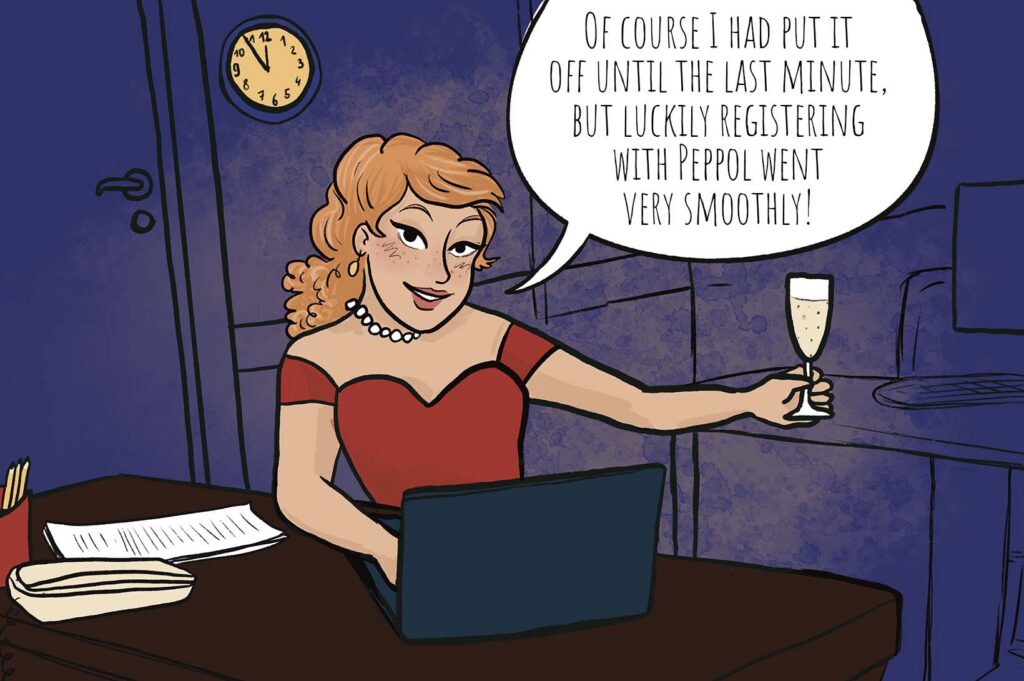
Despite extensive information campaigns, it appears that less than half of Belgian businesses are currently compliant with the new statutory obligation. Failure to switch in time, may, as from 1 January 2026, result inter alia in:
- Invalid invoices, meaning that the customer is under no obligation to pay;
- Loss of VAT deductibility;
- Disputes and operational disruptions;
- Administrative fines of up to EUR 5,000 per incorrect invoice;
- Contractual liability and reputational damage.
The Federal Public Service Finance (FPS Finance) has, however, recently announced the introduction of a tolerance period of three months (until the end of March 2026). During this period, no fines will be imposed for invoices that aren’t sent via Peppol, provided that the involved company can demonstrate that it has taken the necessary steps in due time (e.g. entering into a contract with a software provider, internal project planning, etc.) to comply with this new legal obligation.
Hereby you will find a practical guide: who, what and how before 1 January 2026?
1. Who must use Peppol?
- Belgian VAT-liable entities (companies subject to VAT obligations) in a Belgian B2B context, including non-profit organizations.
- B2B within the EU? Mandatory e-invoicing for intra-Community B2B invoices will only apply as from July, 1 2030.
- B2C? No obligation, but if applied voluntarily, be aware of GDPR compliance (secure digital transmission) and consumer protection rules (such as transparent communication, an accessible alternative for non-digital customers, etc.).
2. What will change?
- Only invoices sent via Peppol will be considered legally issued.
- Errors in an invoice can, after transmission via Peppol, only be corrected by means of a credit note, which must also be sent via Peppol.
- Peppol provides evidence and traceability: the system automatically records the date and time of dispatch and receipt. Disputes such as “I never received the invoice” will effectively disappear.
Peppol, however, does not affect the following:
- Payment terms remain governed by statutory and contractual provisions. Peppol does not regulate the payment of invoices.
- Acceptance of the invoice remains subject to existing rules. Upon receipt via Peppol, the customer remains obliged to verify the invoice and, where appropriate, lodge a protest. Any protest must be timely and duly reasoned.
- Reminders and formal notices are not sent via Peppol but continue to be issued by email or registered letter.
3. Update your general terms and conditions
- Designate Peppol as the sole legally valid method of transmission. Provide that any other form of invoice can only be regarded as a copy.
- Include your Peppol ID (your unique electronic address) to avoid disputes regarding an incorrect or invalid delivery point.
- Amend payment clauses, verification and dispute provisions to reflect the use of Peppol. For example: the customer must notify any errors within X days of receipt via Peppol (the processing of invoices via Peppol may qualify more quickly as implicit acceptance).
Not all Peppol software solutions allow the automatic inclusion of general terms and conditions. It is still recommended to provide the general terms and conditions separately, e.g. together with quotations, purchase orders, order confirmations, delivery notes, etc.
4. Questions about implementation, legal impact or your general terms and conditions?
Andersen in Belgium will be pleased to assist you with the practical and legal implementation of Peppol within your organization, as well as with the revision of your contracts and general terms and conditions on this point.
David Van Iseghem (Partner – Mediator) & Roxane Vrambout (Associate)