Judgment of the Council for Permit Disputes of September 18, 2025, no. RvVb-A-2526-0037.
What was the issue?
The owner of a house lost his home after a fire in 2016. This house was not zoned for residential use, as it was located in an agricultural area, a zone where residential construction is generally not permitted. The owner wanted to build a new house on the same site and submitted several permit applications, which were all rejected.
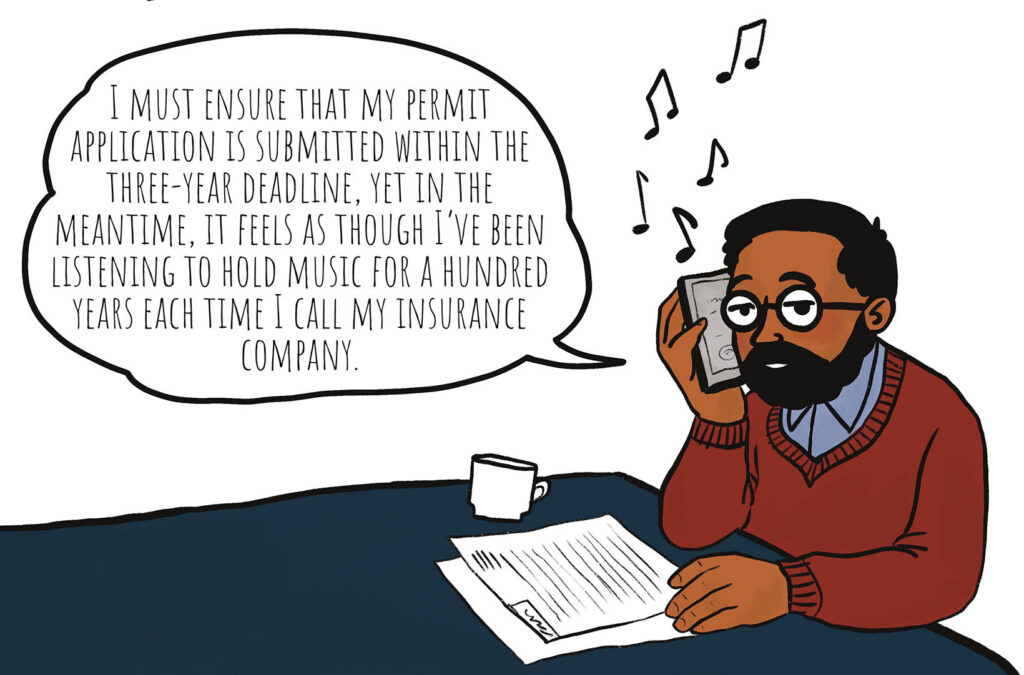
The last application was dated 2023 and was rejected by the province because it was submitted too late. According to the province, the application had to be submitted within three years of the insurance amount being awarded, as stipulated in Article 4.4.21 of the Flemish Spatial Planning Code (VCRO).
The province based its decision on a letter from the fire insurer dated 2017, in which a specific insurance amount was awarded to the applicant. According to the province, the three-year period began at that time, which meant that the 2023 application was too late.
The owner disagreed with this, arguing, among other things, that there was a dispute between him and the insurer about the insurance amount. This dispute has since been brought before the civil court, so that the insurance amount already awarded may still change.
What did the Council for Permit Disputes decide?
The Council specified that the three-year period only starts to run from the moment the owner has certainty about the full insurance amount. Because the owner and his insurer disagreed from the outset about the calculation of the fire damage and also submitted this dispute to the civil court, the Council found that there was still no clarity about the final insurance amount.
According to the Council, the province had therefore wrongly ruled that the application had been submitted too late. The Council consequently overturned the refusal of the permit application and obliged the province to take a new decision.
Why is this ruling important?
This ruling clarifies how the three-year period referred to in Article 4.4.21 of the VCRO should be interpreted. As long as there is a genuine dispute about the full insurance amount, the administration cannot simply declare that the deadline for submitting a claim has expired.
On the one hand, this decision offers hope to owners of non-zoned homes that have been destroyed by force majeure and who are at risk of losing out due to lengthy insurance procedures. On the other hand, these owners can now also rely on this to extend the three-year period as much as possible.
Conclusion
The Council confirms that the provision in Article 4.4.21 VCRO is intended to protect owners of non-compliant homes against misfortune and force majeure.
Anyone in a similar situation would be well advised to seek legal advice in good time: the interpretation of the terms and conditions in Article 4.4.21 VCRO remains complex, but can be decisive in determining whether or not a permit can be obtained in cases of force majeure.
Please do not hesitate to contact Andersen’s real estate team in Belgium for more information and assistance in similar cases and proceedings before the Council for Permit Disputes.
Matias Osorio Olivera
Counsel